

Teal Pumpkin Project
Changing candy to non-edible items
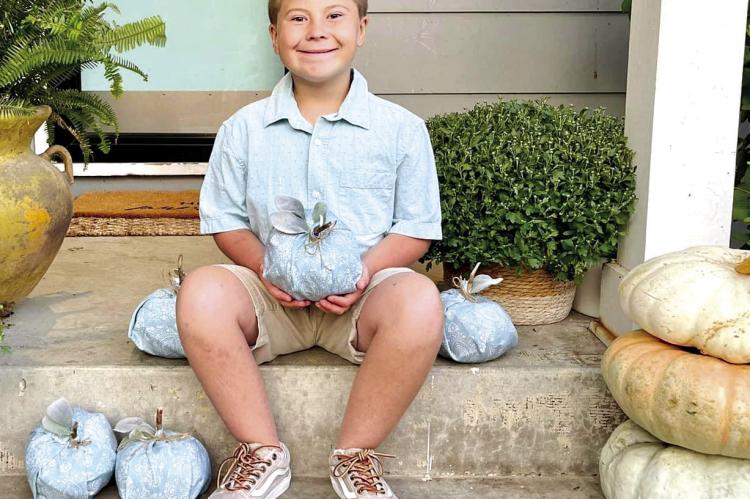
Halloween is just around the corner, and although the holiday is about dressing up, saying “trick or treat” and telling scary stories, the Teal Pumpkin Project brings a whole new take on the holiday.
The Teal Pumpkin Project involves setting a pumpkin painted teal or blue around your doorstep or in the front of your home. This serves as a symbol of having non-food treats available, such as glow sticks or small toys. This small yet impactful act promotes inclusion for trick-ortreaters with food allergies or other conditions. “Food-centered holidays can be isolating for families who have kids with special concerns surrounding food,” said Sara Grosso, an advocate from Lexington. Grosso’s son, 9-year-old Grayson, goes through life with Prader-Willi Syndrome (PWS).
“Between food allergies, diabetes and other complex medical conditions like PWS, there is a large niche of kiddos who feel the sting of being ‘different’ from their peers on Halloween,” Sara Grosso added.
A rare genetic disorder, PWS causes a variety of medical concerns that include an insatiable appetite and slowed metabolism. Food must be kept out of reach and locked away to prevent binge eating, and individuals with PWS require calorierestrictive diets, Sara Grosso added.
Virtually any food can cause a reaction, she noted. Many popular Halloween candies contain nuts, milk, egg, soy or wheat, which are some of the most common allergens in children and adults. Many miniature or fun-size versions of candy items contain different ingredients than their full-size counterparts. Some miniature candy items might not have labels, making it difficult for parents to determine whether these items are safe for children with food allergies.
Non-food treats provide a safe, fun alternative for children having food allergies and other conditions in which candy might present a problem, according to Food Allergy Research and Education (FARE).
Sara Grosso admitted she was happy about the project, saying it is refreshing to have other options rather than candy to take away that stress.
“Candy and edible treats just really are not the safest or most inclusive choice anymore, and we have to steer people into that mindset by sharing how we are affected,” she said.
To participate in the Teal Pumpkin Project, one could do following:
• Provide non-food treats for trick-or-treaters.
• Place a teal pumpkin in front of your home to indicate to passersby that you have non-food treats available.
• Spread the word! Share the Teal Pumpkin Project with your friends and family.
The Teal Pumpkin Project was inspired by a local awareness activity run by the Food Allergy Community of East Tennessee. FARE appreciates the ongoing partnership as the groups work to reach families across the country and around the world with the Teal Pumpkin Project’s messages of awareness, inclusion and community. More information can be found at www.foodallergy. org/resources/about-tealpumpkin- project.
Food allergies are life-altering and potentially lifethreatening diseases. They also are a growing public health issue. In America, one in 13 children has a food allergy – roughly two in every classroom. For these children, even a tiny amount of their allergen has the potential to cause a severe reaction.