

Moving moments from city history on display
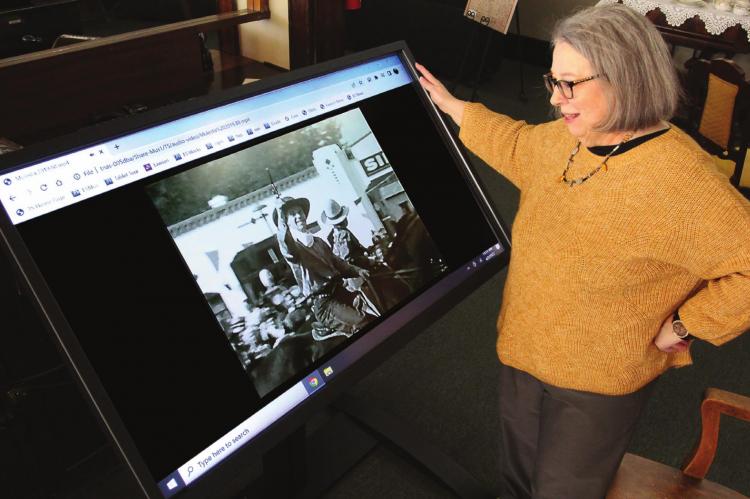
EXCELSIOR SPRINGS – Video from a city festival in the 1930s – including images of Native Americans, cowboys and a stagecoach – is available on a new, widescreen monitor at the Excelsior Springs Museum and Archives, 101 E. Broadway.
“Several people donated to this,” museum Director Kathy Duncan said.
Donations allowed the museum to buy the monitor, which offers a look at a pre-World War II community event that once made national headlines, the Mulesta Festival, a rodeo-carnival.
“It celebrated mules,” Duncan said, as the animals proved important to the area’s economy 90 years ago.
The Mulesta Festival – aided at the time by community entrepreneur and philanthropist B.C. Hedges – attained prominence by offering patrons much more than mules. The audience could see Native Americans, cowboys, a stagecoach and trick riders, Duncan said.
“This was a big thing. This made national news,” she said.
One of the world’s most prominent magazines in the 1930s, Life, featured the Mulesta Festival on Nov. 15, 1937.
Based on information from the Business Women of Missouri website, from Sept. 21-23, 1939, the Excelsior Springs Business Women’s Club took a prominent part in the five-mile-long parade “$100,000 March of Mules,” a feature of the Fourth Annual Mulesta.
“More than 25,000 persons attended this parade, at that time said to be the most colorful and unique ever presented in the state of Missouri,” based on the website. “The local BPW was responsible for securing riders for the more than 100 ‘rideable’ mules for the event.”
For comparison, the University of Central Missouri received recognition from the Guinness Book of World Records for holding the modern record for the most confirmed mules in a parade, 50. If the 1939 information could be confirmed in terms of numbers and being an actual parade, then that would make Mulesta the all-time recordholder.
Like other events that took place before the war, the festival did not continue afterward. But thanks to the donation of the Mulesta video and the monitor, museum guests can get a look at some of the activities involved in the Excelsior Springs festival from bygone moments in city history, Duncan said.